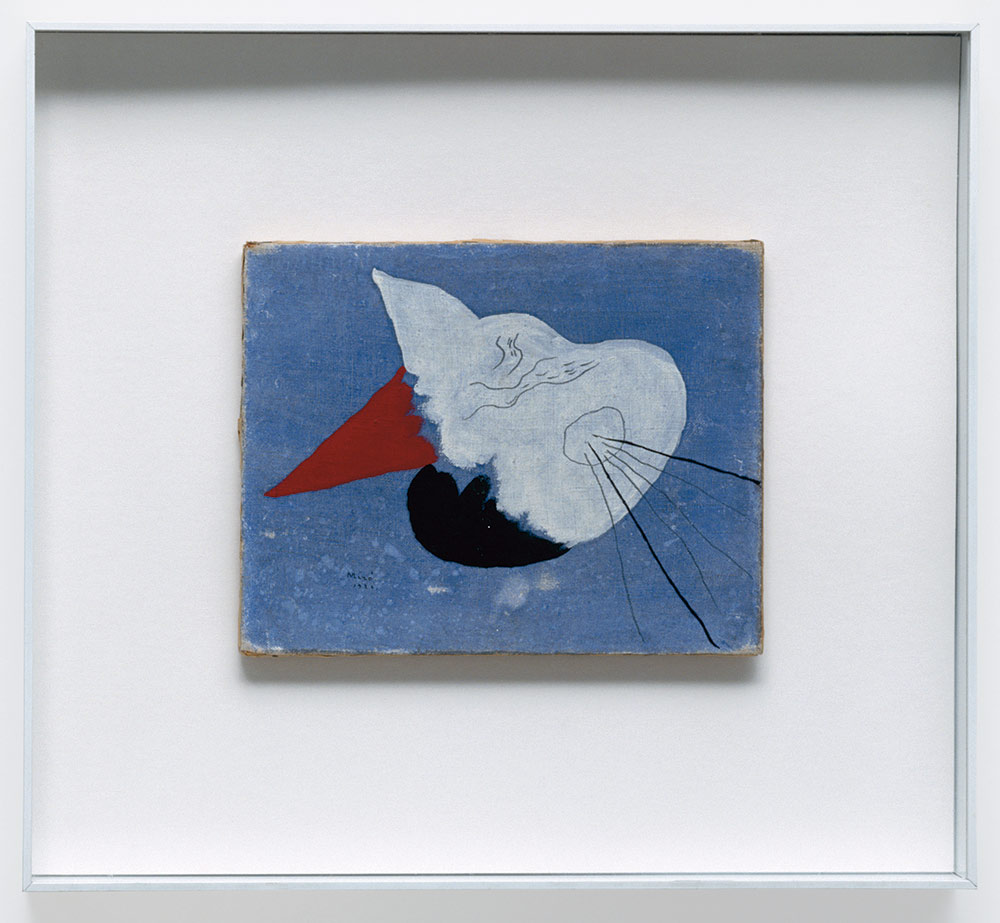
Museé Les Abattoirs Toulouse, Joan Miró, Protestation

From 03/10/2026 to 07/03/2027
Les Abattoirs presents, for the first time, an exhibition dedicated to the artist Joan Miró (1893–1983), an icon of Spanish modern art. For this exceptional exhibition, which brings together almost two hundred works, Les Abattoirs has adopted the unprecedented approach of highlighting protest as a defining feature of his artistic process.
The exhibition takes as its starting point the critique formulated in 1926 by Louis Aragon and André Breton during Sergei Diaghilev’s ballet “Romeo and Juliet”, for which Miró designed the costumes. It is from the pamphlet that the two surrealists brandished on that occasion that the exhibition takes its title: “Protest”. Through a collection of works rarely exhibited in France, the exhibition traces various moments of experimentation that bear witness to the place of protest in Miró’s artistic exploration, as he wrestled head-on with painting, even going so far as to ‘murder’ it. In a context marked by war and the Franco regime (1936-1975), Miró reappropriated protest and transformed it into a creative act that was in itself a form of dissent. The exhibition thus highlights an artist who was decidedly in tune with his time, as well as the political resonance of his work, presenting his collaborations with a young generation of politically engaged artists (Josep Royo, Pere Portabella and the theatre company La Claca).
Organised chronologically, the exhibition traces Miró’s various attempts to go beyond painting and shows how these efforts echoed contemporary events.
The works on display also reveals Miró’s impressive ability to constantly question his own work, radicalising his approach to painting, especially through the relationships he forged with a younger generation of politically committed artists.
This unique approach thus aims to undermine both the notion of the solitary genius and that of the “late work”, concepts often used to portray great modern artists. He thus demonstrates how, by subverting the act of protest, Miró continually challenges his own painting, turning it into an object of protest in its own right, one that embodies the tensions of his era. He thus becomes the icon of anti-authoritarian fervour.
La Col·lecció Suñol Soler participa en aquesta exposició amb l’obra Peinture , 1926 de Joan Miró.
Compartir